
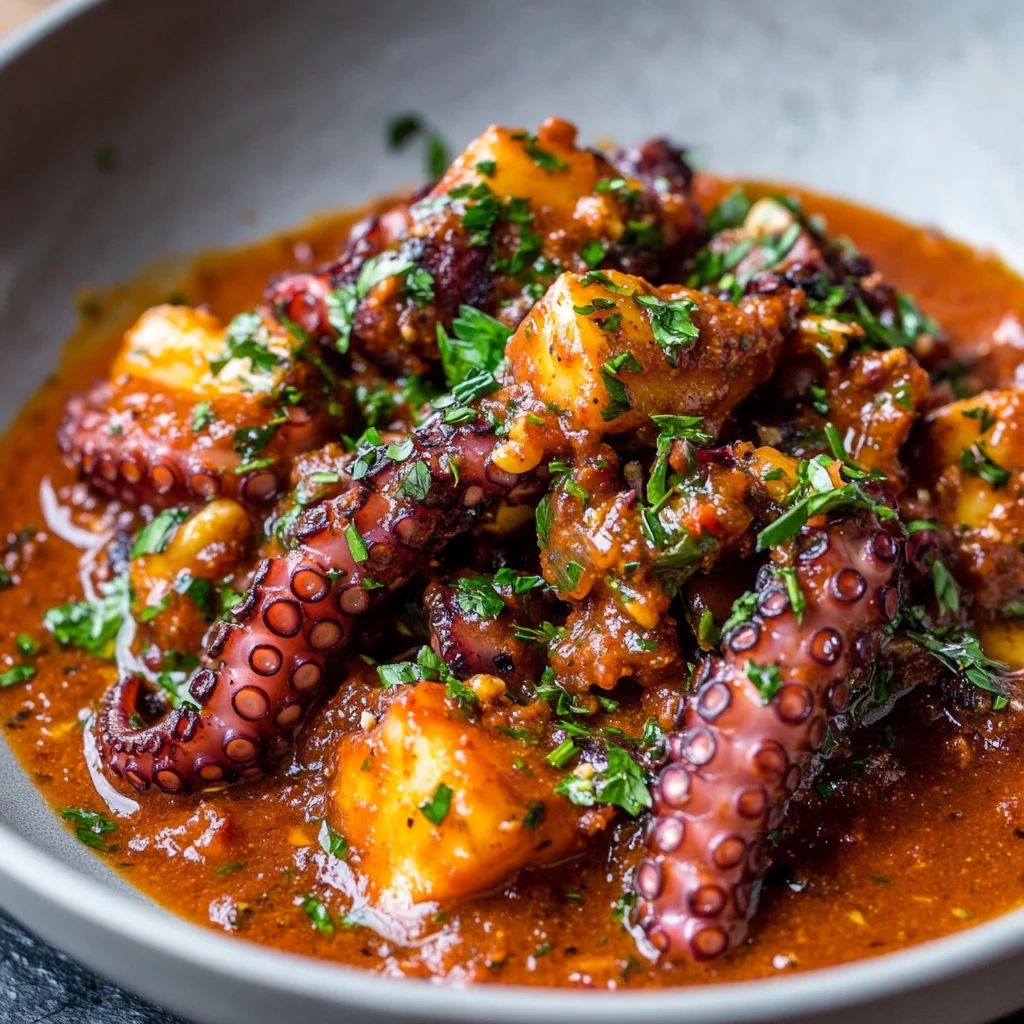
🐙 Spanish-Style Braised Octopus with Potatoes (Pulpo Guisado): A Taste of the Mediterranean
🌟 Introduction: Unlock the Secret to Tender Octopus
Are you ready to elevate your culinary game with a dish that is both exotic and comforting? This recipe for Spanish-Style Braised Octopus with Potatoes (Pulpo Guisado) is the answer. Forget tough, rubbery octopus; this method guarantees an incredibly tender, succulent texture that melts in your mouth. Imagine perfectly cooked octopus tentacles, boasting a slightly sweet, delicate seafood flavor, swimming in a smoky, rich, and vibrant tomato-based sauce infused with Pimentón de la Vera (Spanish smoked paprika). The inclusion of tender, starchy potatoes soaks up the glorious sauce, creating a complete and satisfying meal. This Pulpo Guisado is a classic of Mediterranean cuisine, celebrated for its deep, complex flavor and surprisingly easy preparation, making it the ultimate centerpiece for any dinner party or a luxurious weeknight indulgence. It’s the best braised octopus recipe you will ever find!
🛒 Ingredients: The Essence of Spanish Flavor
The success of this authentic Spanish recipe lies in a few key ingredients, each playing a critical role in building the signature smoky, savory, and rich profile.
| Ingredient | Quantity | Role in the Dish |
|---|---|---|
| Octopus (Whole, cleaned) | 2 lbs | The star protein. Provides a mildly sweet, meaty texture. Braising is essential to achieve the desired tender perfection. |
| Yellow Potatoes (e.g., Yukon Gold, cut into 1-inch chunks) | 1.5 lbs | The essential starch. They absorb the flavorful braising liquid, adding bulk, creamy texture, and creating a complete, hearty stew. |
| Onion (Yellow, finely diced) | 1 Medium | The aromatic foundation. Provides sweetness and depth when sautéed, forming the sofrito base of the sauce. |
| Garlic (Freshly minced) | 4 Cloves | The classic Spanish aromatic. Adds a pungent, warm flavor that is crucial for a deeply savory sauce. |
| Pimentón de la Vera (Sweet or Smoked Paprika) | 2 Tbsp | The key flavor driver. This Spanish smoked paprika imparts a signature smoky, rustic, and sweet flavor that defines the dish. Do not substitute. |
| Crushed Tomatoes (Canned) | 1 (14.5 oz) Can | Provides the vibrant color and acidic backbone of the guisado (stew). Its sweetness balances the smoky paprika. |
| Dry White Wine (e.g., Verdejo or Sauvignon Blanc) | 1/2 Cup | Used to deglaze the pot, lifting the flavorful browned bits and adding a necessary layer of acidity and complexity. |
| Fish or Vegetable Broth | 2-3 Cups | The braising liquid. Provides moisture and flavor for the long, slow cook, ensuring the octopus and potatoes become fork-tender. |
| Extra Virgin Olive Oil (High-Quality) | 3 Tbsp | Used for sautéing and finishing. Contributes the authentic Mediterranean richness and a slightly peppery note. |
| Bay Leaves (Dried) | 2 | Adds a subtle menthol and herbal background that complements the seafood. |
| Fresh Parsley (Chopped) | 1/4 Cup | Used for a fresh, bright garnish that cuts through the richness and adds visual appeal. |
| Salt and Black Pepper (Kosher/Freshly ground) | To Taste | Essential for seasoning and balancing the intense flavors. |
| 👩🍳 Step-by-Step Instructions: Achieving Perfect Tender Octopus | ||
| The secret to this recipe is the slow, patient braising. Follow these steps for an unforgettable result. | ||
| Part 1: Preparing the Octopus for Tenderness |
- Prep the Octopus: If using fresh, ensure the octopus is cleaned (remove the beak and ink sac). If using frozen, allow it to thaw completely. For maximum tenderness, a traditional method is to “shock” the octopus by dipping it into boiling water three times for 10 seconds each before the main cook.
- Initial Simmer (Optional): Many chefs simmer the whole octopus in plain water with a cork (believed to aid tenderness) for 30-45 minutes. Remove and reserve the liquid. This pre-cook shortens the braise time and ensures a softer texture.
Part 2: Building the Sofrito and Braising Base - Sauté Aromatics: Heat the olive oil in a large, heavy-bottomed pot or Dutch oven over medium heat. Add the diced onion and a pinch of salt. Cook slowly for 8-10 minutes until the onion is soft and translucent (the sofrito base).
- Add Garlic and Paprika: Stir in the minced garlic and cook for 1 minute until fragrant. Crucially, stir in the Pimentón de la Vera (smoked paprika). Cook for only 30 seconds—this toasts the spice and maximizes the flavor, but be careful not to burn it!
- Deglaze: Pour in the dry white wine. Bring to a simmer, scraping up any delicious browned bits (fond) from the bottom of the pot. Let the wine reduce by half.
- Add Liquid: Stir in the crushed tomatoes, broth, and bay leaves. Bring the sauce to a gentle simmer.
Part 3: Braising the Octopus and Potatoes - Braise the Octopus: Add the whole or large pieces of octopus to the simmering sauce. The liquid should mostly cover the octopus. Reduce the heat to low, cover the pot tightly, and let it gently braise for 1 to 2 hours. The exact time depends on the size of the octopus and whether you pre-cooked it. The octopus is done when a fork can easily pierce the thickest part of the tentacle.
- Add Potatoes: Once the octopus is nearly tender (about 30 minutes before completion), remove it carefully and set it aside. Add the chunked potatoes to the sauce. Return the octopus to the pot.
- Finish Braising: Continue to braise until the potatoes are fork-tender and the flavors have fully melded (about 25-30 minutes).
- Serve: Remove the bay leaves. If you braised the octopus whole, use scissors or a sharp knife to cut it into 1-inch thick pieces. Stir the pieces back into the guisado. Taste and adjust seasoning with salt and pepper. Garnish generously with fresh chopped parsley.
💡 Pro Tips for Perfection - Octopus Tenderness is Key: Freezing and thawing the octopus before cooking helps break down muscle fibers, naturally tenderizing it. Low and Slow is the mantra for the braise—never boil, only gently simmer.
- Don’t Skimp on the Paprika: Use Pimentón de la Vera (Spanish smoked paprika). Regular paprika lacks the deep, smoky flavor that defines Pulpo Guisado.
- The Potato Trick: Add the potatoes after the octopus has mostly tenderized. This prevents the potatoes from becoming mushy during the long cook time, ensuring they are perfectly creamy at the end.
- Resting the Dish: Like any good stew, this Pulpo Guisado tastes even better the next day! Allowing it to rest overnight allows the octopus and potatoes to fully soak up the smoky tomato sauce.
- Thickening the Sauce: If the sauce is too thin, remove the lid for the last 15 minutes of cooking to let it reduce. Alternatively, mash a few of the cooked potatoes against the side of the pot to naturally thicken the guisado.
🍽️ Serving Suggestions
This Spanish Braised Octopus is a satisfying one-pot meal, but these accompaniments will turn it into a truly memorable feast. - Crusty Bread: Essential for scooping up the last bits of the irresistible, smoky sauce (known as mojar pan). A warm baguette or sourdough works perfectly.
- Simple Green Salad: A side of crisp, fresh greens dressed with a light vinaigrette (lemon juice, olive oil, and salt) provides a bright, acidic contrast to the rich stew.
- Spanish Rice (Arroz Blanco): Simple white rice is a fantastic neutral base that helps absorb the abundance of the flavorful braising liquid.
- Spanish Red Wine: Pair with a medium-bodied Tempranillo or Garnacha to complement the smokiness of the paprika.
🏆 Conclusion: Master the Art of Pulpo Guisado
You now possess the definitive recipe for Spanish-Style Braised Octopus with Potatoes. This method overcomes the common challenge of tough octopus, delivering a tender, beautifully flavored, and deeply satisfying seafood stew. By mastering the low-and-slow braise and utilizing the power of Spanish smoked paprika, you’ve created a dish with authentic Mediterranean charm and unparalleled depth. The combination of succulent octopus, creamy potatoes, and the rich, smoky guisado makes this an absolutely must-try recipe. Stop searching for complex seafood preparations—this Pulpo Guisado is the perfect blend of simplicity and gourmet flavor. Cook it once, and you’ll be hooked for life!