
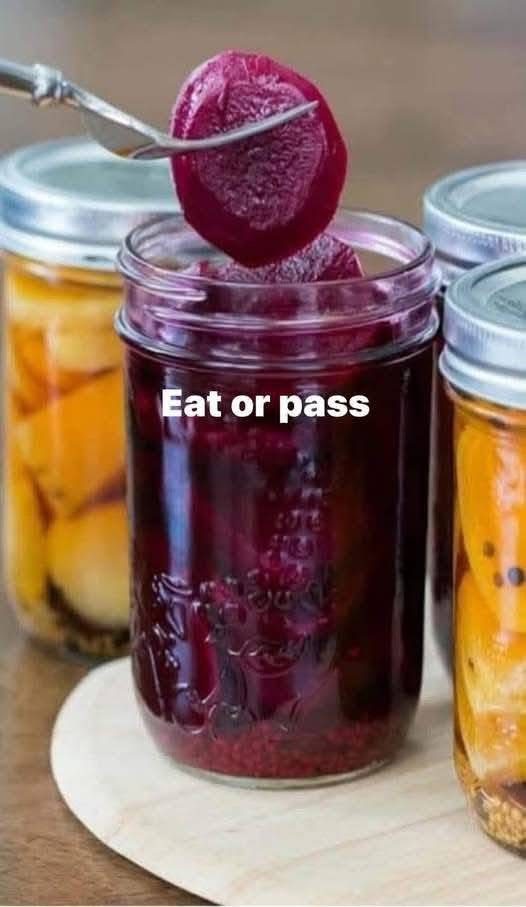
Homemade Pickled Beets Recipe 🌸
✨ Introduction
Pickled beets are a delightful blend of earthy sweetness and tangy sharpness, a traditional preserve loved across cultures. Whether you enjoy them as a snack, a salad topping, or a side dish, pickled beets capture the deep ruby-red beauty of beets and extend their shelf life through the art of pickling. This recipe brings together the natural sweetness of beets with a brine of vinegar, sugar, and spices, creating a jar of goodness that’s both delicious and nourishing.
🥕 Ingredients
For about 4 medium jars of pickled beets:
- 2 pounds (900 g) fresh beets
- 2 cups white vinegar
- 1 cup water
- ¾ cup granulated sugar (adjust to taste)
- 1 ½ teaspoons salt
- 1 cinnamon stick (optional)
- 4–5 whole cloves (optional)
- ½ teaspoon black peppercorns
- 2 bay leaves
- ½ medium onion, thinly sliced (optional, for extra flavor)
📝 Instructions
- Prepare the beets: Wash thoroughly to remove dirt. Trim off greens, leaving about 1 inch of stem to avoid bleeding.
- Cook the beets: Place in a large pot, cover with water, and simmer for 35–45 minutes until tender. Drain and cool slightly.
- Peel the beets: Rub skins off using your hands or a paper towel — they should slip off easily. Slice or quarter as desired.
- Make the brine: In a saucepan, combine vinegar, water, sugar, salt, and spices. Bring to a gentle boil, stirring until sugar dissolves.
- Pack jars: Place beet slices into sterilized jars. Add onion slices if using.
- Pour the brine: Carefully pour hot brine over beets, leaving ½-inch headspace.
- Seal and store: Wipe rims, place lids, and tighten bands. Process jars in boiling water bath for 10 minutes for long-term storage, or refrigerate immediately for quick pickles.
🔧 Methods
- Boiling Method: Traditional way to cook beets until tender.
- Roasting Alternative: Beets can be roasted instead of boiled for deeper caramelized flavor.
- Hot Brine Method: Ensures that vinegar and spices penetrate quickly.
- Canning Method: Hot water bath sealing extends shelf life up to a year.
📜 History
Pickling beets dates back centuries. Ancient civilizations like the Babylonians and Egyptians preserved vegetables with vinegar and salt. Beets, native to the Mediterranean region, gained popularity in Europe during the Middle Ages. By the 18th and 19th centuries, pickled beets had become a staple in Eastern Europe, Russia, and Scandinavia, later spreading to North America where they remain a favorite in home canning traditions.
💎 Benefits
- Rich in antioxidants (betalains) that support detoxification.
- High in fiber, aiding digestion.
- Source of iron and folate, supporting blood health.
- Natural energy booster due to nitrates improving circulation.
- Long shelf-life when pickled, reducing food waste.
🏗️ Formation
The formation of pickled beets relies on the balance of vinegar (acidity), sugar (sweetness), and salt (preservation). Together, they create a safe environment that prevents bacterial growth while enhancing flavor. The vibrant ruby color forms a beautiful visual addition to meals, symbolizing warmth and tradition.
🌺 Conclusion
Homemade pickled beets are more than just a recipe — they are a preservation of tradition, health, and flavor. From their ancient roots to their place on today’s tables, they stand as a timeless food that is as beautiful as it is nourishing. With this recipe, you can bottle up the essence of freshness and enjoy it for months to come.
❤️ Lovers of Pickled Beets
Pickled beet lovers include:
- Eastern Europeans who pair them with hearty meals.
- Health-conscious eaters who value their nutrition.
- Home canners who find joy in preserving seasonal produce.
- Food lovers worldwide who enjoy their tangy-sweet charm in salads, sandwiches, or even straight from the jar.