
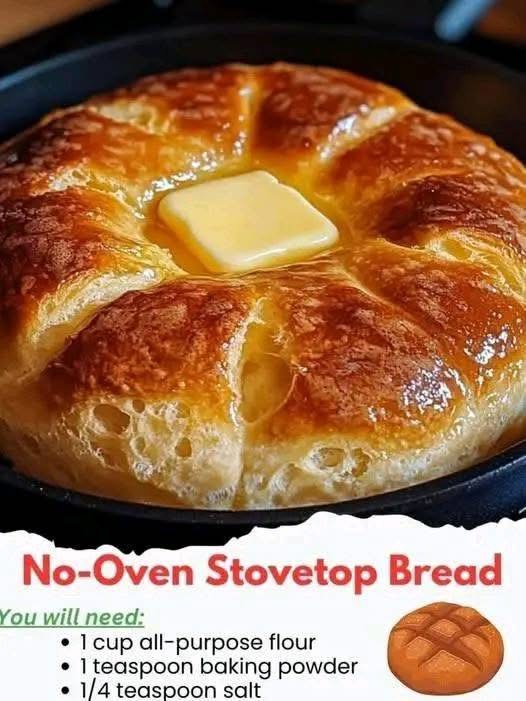
No-Oven Stovetop Bread
Introduction
Bread is often called the “staff of life,” a staple that has nourished civilizations for millennia. While most people rely on ovens to bake bread, stovetop bread offers a practical, energy-saving, and creative way to achieve the same soft, fluffy, and golden results. This recipe is perfect for anyone without an oven, living in small spaces, or simply wanting to try a traditional cooking method.
The beauty of stovetop bread lies in its simplicity: just a skillet, pot, or heavy pan, some patience, and the magical transformation of flour, yeast, water, and heat into a comforting loaf.
History
Stovetop breads are among the oldest forms of breadmaking. Long before modern ovens, people cooked bread on flat stones, clay griddles, or cast-iron pans over open flames. Cultures worldwide still keep this tradition alive — think of Indian naan, Middle Eastern pita, Ethiopian injera, or Mexican tortillas.
Our stovetop loaf is inspired by rustic European bread but adapted for modern kitchens, proving that you don’t need an oven to enjoy fresh, homemade bread.
Ingredients (Makes 1 medium loaf)
- 3 cups (360 g) all-purpose flour (or bread flour)
- 1 ½ tsp salt
- 1 ½ tsp sugar
- 2 tsp instant yeast (or 1 packet active dry yeast)
- 1 cup (240 ml) warm water (not hot, about 40°C / 105°F)
- 2 tbsp olive oil or melted butter
Optional: Sesame seeds, herbs, or garlic butter for extra flavor.
Instructions / Methods
Step 1: Activate yeast (if using active dry yeast)
- Mix yeast, sugar, and warm water in a small bowl.
- Let it sit for 5–10 minutes until foamy.
- (If using instant yeast, you can skip this step and add it directly to the flour.)
Step 2: Make the dough
- In a large mixing bowl, combine flour and salt.
- Add yeast mixture (or water + instant yeast) and olive oil.
- Mix until a rough dough forms.
Step 3: Knead
- Transfer to a floured surface.
- Knead for about 8–10 minutes until the dough is smooth and elastic.
- If sticky, dust lightly with flour; if too dry, add a splash of water.
Step 4: First rise
- Place the dough in a greased bowl.
- Cover with a damp towel or plastic wrap.
- Let rise for 1 hour or until doubled in size.
Step 5: Shape
- Punch down the dough gently.
- Shape into a round loaf or divide into smaller portions for flat rounds.
Step 6: Second rise
- Place shaped dough in a lightly oiled heavy-bottomed skillet, Dutch oven, or non-stick pan.
- Cover and let rest for 20–30 minutes.
Step 7: Cook on stovetop
- Turn heat to low-medium.
- Cover the skillet with a lid (to trap steam like an oven).
- Cook for 12–15 minutes per side, flipping halfway, until golden brown and cooked through.
- For extra softness, wrap bread in a clean towel while it cools.
Benefits
- No oven required — perfect for small kitchens, travel, or emergencies.
- Nutritious and customizable — add seeds, herbs, or whole grains.
- Budget-friendly — uses simple pantry staples.
- Quick cooking — no long preheating like with ovens.
- Portable method — can be cooked over gas, electric, or even campfires.
Formation
This stovetop bread forms with:
- Base structure: Yeast and flour build the airy, chewy texture.
- Moisture & oil: Keep it soft and tender.
- Steam + skillet heat: Mimic oven baking, forming a crust outside while the inside stays fluffy.
Conclusion
Stovetop bread proves that where there is heat, there is bread. It’s a comforting, rustic loaf that bridges ancient tradition with modern convenience. With a crunchy crust, pillowy inside, and the aroma of fresh bread filling your home, you’ll hardly miss the oven.
For Lovers
Bread has always symbolized sharing and love. Tearing apart a fresh loaf and dipping it into olive oil, soup, or butter is one of the simplest yet most intimate culinary gestures. Cooking stovetop bread together can be a romantic experience — kneading side by side, waiting for the dough to rise, and finally enjoying warm bread fresh from the pan.
Like love, bread requires patience, warmth, and care. And just like this stovetop bread, even without perfect conditions, love can rise beautifully.
✨ Final Word for Lovers
“Break bread together, and you break open the heart.” This stovetop bread is more than food — it is nourishment for the soul, a gift to be shared between friends, family, and lovers.