
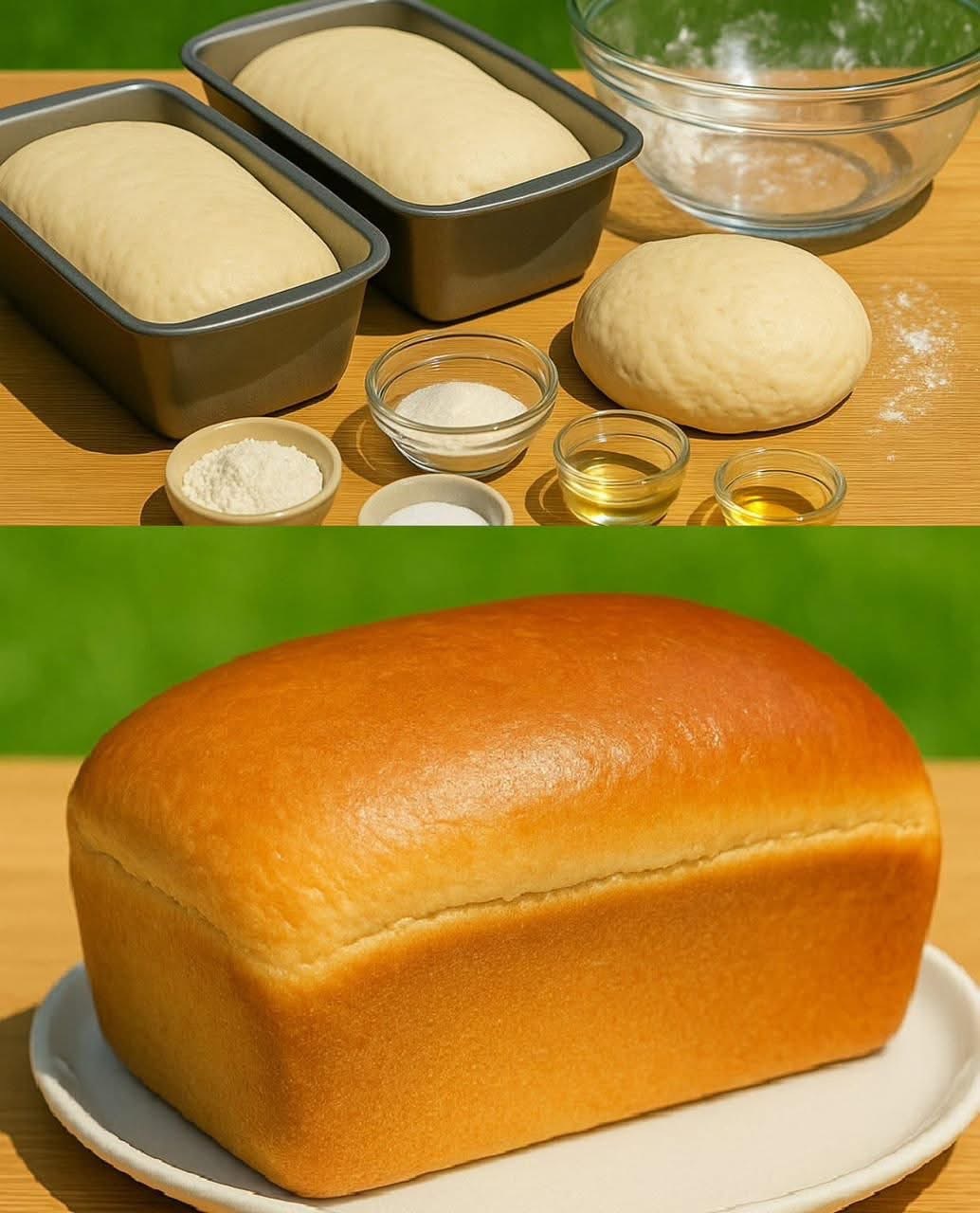
Amish White Bread Recipe
🌸 Introduction
Amish white bread is a classic, old-fashioned bread that has been passed down through generations in Amish communities. Known for its tender crumb, light sweetness, and pillowy texture, it is simple to prepare and incredibly versatile. This bread pairs well with both savory dishes and sweet spreads, making it a beloved household staple. Its homemade aroma alone is enough to fill a kitchen with warmth and nostalgia.
📝 Ingredients
- 2 cups warm water (about 40–45°C / 105–115°F)
- ⅔ cup white sugar
- 1 ½ tbsp active dry yeast (or 2 standard packets)
- ¼ cup vegetable oil (or melted butter)
- 1 ½ tsp salt
- 6 cups all-purpose flour (or bread flour, divided)
👩🍳 Instructions & Methods
Step 1: Activate the Yeast
- In a large bowl, dissolve the sugar in warm water.
- Sprinkle the yeast over the top and let it sit for 5–10 minutes until foamy.
Step 2: Mix the Dough
- Stir in the oil and salt.
- Add the flour, one cup at a time, until a soft dough forms.
Step 3: Knead the Dough
- Turn the dough onto a lightly floured surface.
- Knead for about 8–10 minutes until smooth and elastic.
Step 4: First Rise
- Place dough in a greased bowl, turning once to coat.
- Cover with a damp cloth and let rise in a warm place for 1 hour, or until doubled in size.
Step 5: Shape the Loaves
- Punch down the dough and divide into two equal portions.
- Shape into loaves and place in two greased 9×5-inch loaf pans.
Step 6: Second Rise
- Cover and let rise again until the dough crowns about 1 inch above the pans (30–45 minutes).
Step 7: Bake
- Preheat oven to 175°C (350°F).
- Bake for 30–35 minutes or until golden brown and hollow-sounding when tapped.
Step 8: Cool & Serve
- Brush tops with melted butter for a soft crust.
- Cool slightly before slicing.
📜 History
Amish white bread traces its roots to Amish and Mennonite communities, where baking was an essential part of daily life. Recipes were passed down through families, often written in handwritten cookbooks or shared by word of mouth. The bread’s gentle sweetness and simplicity reflected the Amish lifestyle—humble, practical, and centered around family. Over time, Amish bread spread beyond the community and became a cherished recipe in kitchens worldwide.
🌿 Benefits
- Nutritious & filling: A wholesome source of carbohydrates.
- Homemade freshness: No preservatives, unlike store-bought loaves.
- Budget-friendly: Uses simple pantry staples.
- Versatile: Works for sandwiches, toast, French toast, or dinner rolls.
- Comfort food: Warm, fluffy bread brings coziness and nostalgia.
🏗️ Formation (Structure & Texture)
- The yeast fermentation creates air bubbles, giving the bread its soft and fluffy structure.
- Proper kneading builds gluten, which provides elasticity and chew.
- The sugar enhances browning and gives the bread a slight sweetness.
- The oil adds tenderness, preventing the bread from becoming dry.
❤️ Lovers (Who Loves This Bread)
- Families: Perfect for daily sandwiches and toast.
- Children: Its mild sweetness makes it a kid favorite.
- Home bakers: Love its simplicity and reliability.
- Amish communities: Continue to cherish it as a traditional staple.
- Bread enthusiasts: Enjoy experimenting with variations like cinnamon or honey Amish bread.
🏁 Conclusion
Amish white bread is more than just a loaf of bread—it’s a tradition, a comfort, and a symbol of simple living. With its soft texture, gentle sweetness, and homemade charm, it wins hearts across generations. Once you try it fresh from the oven, it’s hard to return to store-bought bread.
💞 Conclusion with Lovers
Loved by children with peanut butter, cherished by families at the dinner table, and admired by home bakers who value tradition, Amish white bread brings warmth to every kitchen. It is not just baked bread—it is baked love, connecting generations with every fluffy slice.