
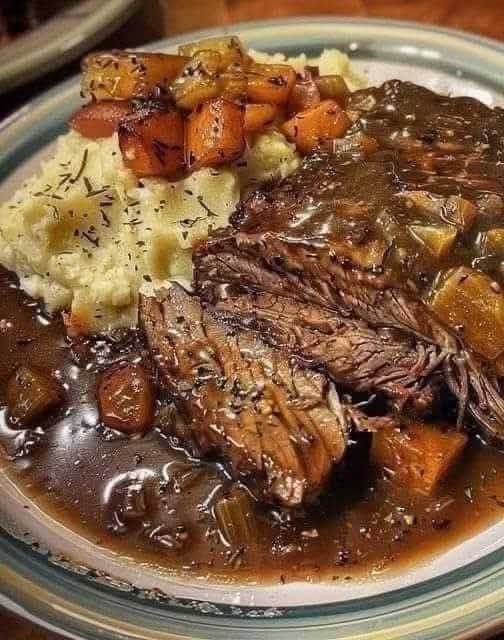
The Ultimate Melt-in-Your-Mouth Slow-Cooked Pot Roast
There is nothing quite as nostalgic or soul-warming as a perfectly tender pot roast simmering in a rich, savory gravy. Whether you are looking for the ultimate Sunday family dinner or a foolproof comfort food recipe to get you through a chilly evening, this dish is a masterpiece of simplicity and flavor.
Imagine succulent, fork-tender beef falling apart at the slightest touch, surrounded by honey-glazed carrots and served over a bed of creamy garlic mashed potatoes. This is more than just a meal; it is a culinary embrace that fills your home with an aroma so inviting, your neighbors might just knock on your door.
The Anatomy of Flavor: Ingredients and Their Roles
To achieve restaurant-quality pot roast at home, every ingredient must serve a specific purpose in building the flavor profile:
- 3-4 lb Chuck Roast: The undisputed king of roasts. Its high fat content and connective tissue break down during the slow-cooking process, resulting in unrivaled tenderness.
- Kosher Salt and Coarse Black Pepper: Essential for building a flavorful crust during the initial searing phase.
- Olive Oil: A high-quality fat used to sear the beef and lock in those precious juices.
- Yellow Onions: These provide a foundational aromatic sweetness as they caramelize in the beef drippings.
- Fresh Garlic Cloves: Smashed and sautéed to infuse the gravy with a deep, pungent warmth.
- Beef Bone Broth: The liquid gold that acts as the base for your rich brown gravy, providing minerals and depth.
- Red Wine (Cabernet or Merlot): Used to deglaze the pan, lifting the “fond” (browned bits) and adding a sophisticated acidity.
- Carrots and Celery: These classic mirepoix vegetables add texture, natural sweetness, and a rustic aesthetic.
- Fresh Rosemary and Thyme: These woody herbs provide an earthy fragrance that cuts through the richness of the meat.
- Worcestershire Sauce: A secret weapon for adding umami depth and a hint of tang.
Step-by-Step Instructions for Perfection
- The Crucial Sear: Pat your chuck roast dry with paper towels. Season aggressively with salt and pepper. In a heavy-bottomed Dutch oven, heat olive oil over medium-high heat. Sear the meat for 5–7 minutes per side until a dark, caramelized crust forms. Remove and set aside.
- Sauté the Aromatics: In the same pot, toss in your diced onions and celery. Cook until softened. Add the garlic and cook for just 60 seconds to avoid burning.
- Deglaze the Pot: Pour in the red wine. Use a wooden spoon to scrape all the browned bits off the bottom—this is where the intense flavor lives!
- The Slow Braise: Return the beef to the pot. Add the beef broth, Worcestershire sauce, and fresh herbs. Ensure the liquid covers about half the meat. Cover with a tight-fitting lid.
- Low and Slow: Place in a preheated oven at 300°F (150°C) for 3 to 4 hours. Add the carrots during the final hour so they remain tender but not mushy.
- The Final Touch: Once the beef is fork-tender, remove it to a platter. Strain the liquid and simmer it on the stovetop to reduce it into a velvety pot roast gravy.
Pro Tips for the Best Pot Roast
Don’t Rush the Sear: The “Maillard reaction” is your best friend. A grey roast is a flavorless roast; make sure it’s deeply browned.
Let it Rest: Always allow your meat to rest for 15 minutes before shredding. This allows the fibers to reabsorb the savory juices.
Use Room Temp Meat: Take your roast out of the fridge 30 minutes before cooking to ensure an even cook.
Serving Suggestions
To complete this gourmet comfort meal, serve your roast over buttery Yukon Gold mashed potatoes. The potatoes act as a sponge for the decadent gravy. For a touch of brightness, pair it with a side of crispy roasted Brussels sprouts or a simple arugula salad with a lemon vinaigrette to balance the richness.
Why This Recipe Wins
This slow-cooked pot roast recipe is a triumph of traditional cooking techniques meeting modern convenience. It is budget-friendly, requires minimal active prep time, and delivers a high-end dining experience that will impress even the toughest food critics. By focusing on quality ingredients and the “low and slow” philosophy, you create a dish that is consistently succulent, flavorful, and profoundly satisfying.